 How-to
How to Meet Trapper Harvest Record Requirements
Last Updated: November 2, 2026
Quick Summary
Trappers must keep accurate records of every animal taken, including species, sex, date, location, method, and license or tag numbers. Exact harvest record requirements vary by state and species, so check your state wildlife agency's rules before each season. Many states also require tagging or sealing and a timely harvest report.
- Record species, sex, capture date, location, and method of take for every animal.
- Fill in harvest records the same day you check your traps.
- Some states require tags or seals before a pelt can be sold or transported.
- Save the confirmation number from every online report as proof of timely submission.
- Keep harvest records for at least the period your state requires, with backups stored separately.
Table of Contents
- Why Harvest Record Requirements Exist and Who Must Follow Them
- What Information a Trapper Must Include in a Harvest Record
- Furbearer Tagging and Pelt Sealing Requirements by Species
- Building a Trapper Harvest Log Template You Can Actually Use
- Trapping Harvest Report Requirements: Deadlines, Methods, and Late Submissions
- Trapper Recordkeeping Best Practices and How Long to Keep Records
- Your Next Step: Confirming the Rules for Your State and Species
- Frequently Asked Questions
Why Harvest Record Requirements Exist and Who Must Follow Them
Trappers across the United States must keep accurate harvest records, and understanding harvest record requirements helps them do so. Your records help protect furbearer populations over time. They also protect you if a wildlife officer asks questions about an animal you took.
Requirements differ by state and by species. Some states require a harvest report for every furbearer. Others only ask for certain species, such as bobcat or river otter, which often have tighter controls. Check your state wildlife agency's website before each season, since rules change.
Who usually has to follow these rules:
- Licensed trappers working on public or private land
- Anyone selling pelts or carcasses where a state requires documentation
- Trappers taking species with special tags or quotas
Watch out: many trappers assume a license alone covers their paperwork. Most states require separate harvest reporting on top of the license.
What Information a Trapper Must Include in a Harvest Record
A complete harvest record answers five basic questions: what you took, when, where, how, and who took it. Most state forms ask for the same core details.
- Species and sex of each animal
- Date of capture and date the animal was checked
- Location using county, wildlife management unit, or GPS coordinates, depending on your state
- Method of take, such as foothold, snare, or cage trap
- Trapper license number and tag or seal number where applicable
Record details the same day you check your traps. Memory is unreliable after a long run of sets, and a small error can cause a rejected report.
Furbearer Tagging and Pelt Sealing Requirements by Species
Tagging and sealing is where harvest records stop being paperwork and become a physical chain of custody. For a handful of species, many states require a tag or seal before a pelt can be sold or transported.
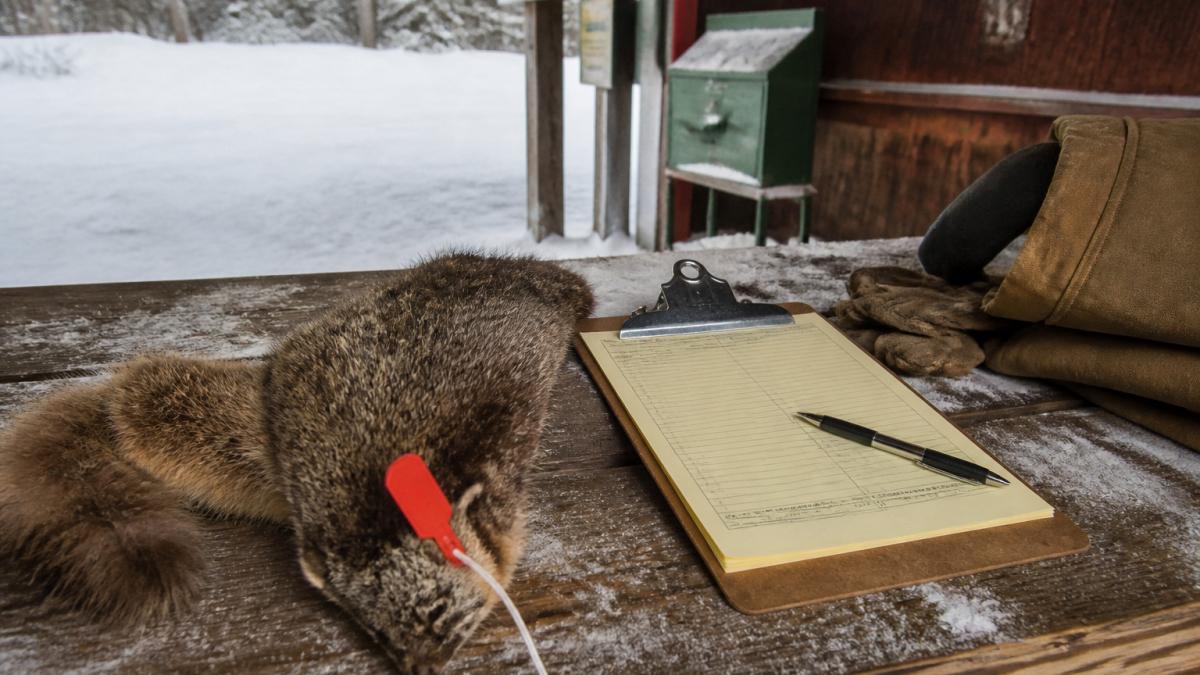
Species that commonly require tagging or sealing (check your state's rules):
- Bobcat and river otter are among the species many states tightly control.
- Fisher is sealed in some states where it is legal to trap.
- Marten, mink, and muskrat often do not require a seal, but some states require tags in specific units.
General sealing steps (your state's process may differ):
- Record the harvest, fill in species, sex, date, location, and method on your harvest record the same day.
- Present the animal, bring the animal or pelt and your license to the designated check station or wildlife office.
- Record the tag or seal number, write the number on your harvest record before you leave the station.
Self-tagging versus in-person sealing: Some states let trappers attach a tag themselves, while others require an official to apply the seal. Confirm which model your state uses for each species before the season opens.
CITES species database and permit guidance
Building a Trapper Harvest Log Template You Can Actually Use
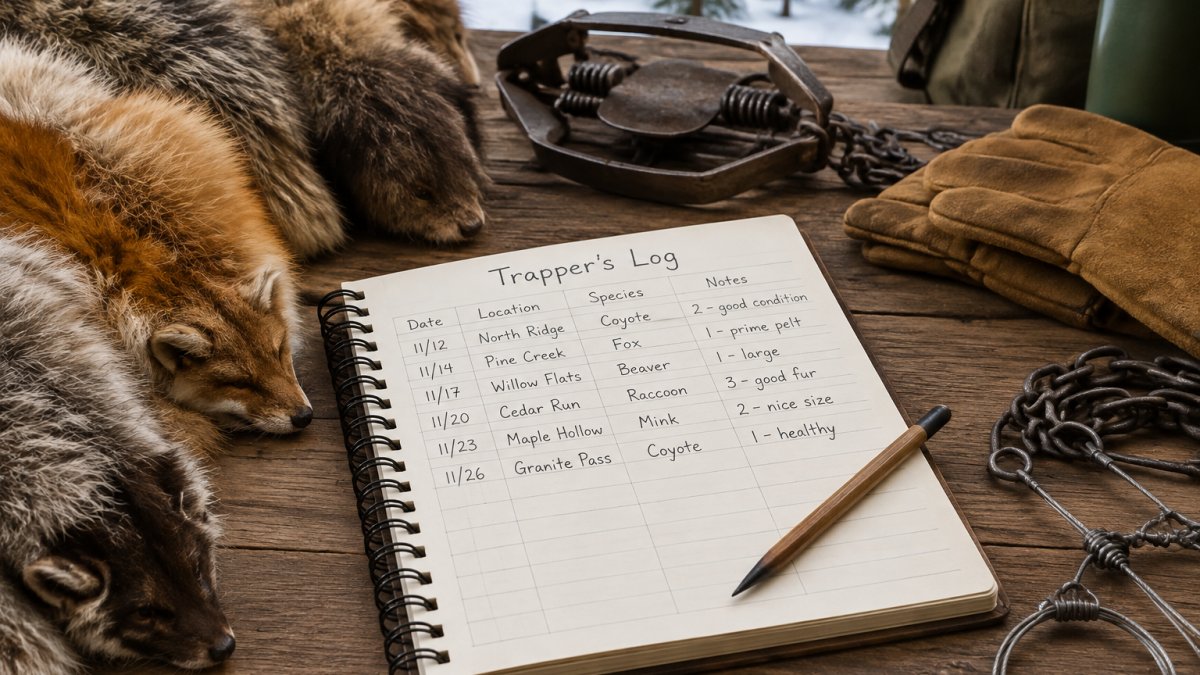
A simple log saves time at reporting season. Use one row per animal and include these columns:
Field | Example Entry |
|---|---|
Date Set | 11/14 |
Date Checked | 11/15 |
Species | Raccoon |
Sex | Male |
Location | Unit 4, Polk County |
Method | Foothold |
Tag Number | 2198-C |
Notes | Pelt prime, sealed at check station |
Keep the log in a waterproof notebook or a spreadsheet you back up weekly. Add a note whenever a trap was missed or sprung without a catch, since some states ask for effort data too.
Trapping Harvest Report Requirements: Deadlines, Methods, and Late Submissions
Reporting deadlines are the part of harvest records that trappers most often miss, because the window is short and the penalty is invisible until the next license cycle. The rules fall into three patterns, and knowing which one your state uses tells you how to build your season routine.
The three deadline patterns:
- Immediate or near-immediate, some states require a report shortly after harvest for sealed species. Check your state's rules for exact timing.
- Periodic, some states use monthly or per-animal reporting for high-volume species.
- Season-end, some states use a single report after the season closes.
How to submit, and why the method matters:
- Online, fastest, and it issues a confirmation number. Save that number; it is your proof of timely submission if a records question comes up later.
- By mail, accepted in many states, but the postmark usually controls whether you met the deadline. Keep a copy of the form and the mailing receipt.
- In person, at a check station or wildlife office, often combined with sealing. The officer's signature or stamp on your record is your confirmation.
If you are late: Contact your state wildlife agency as soon as you realize a deadline was missed, and ask how they handle late reports.
A deadline routine that works:
- At the start of the season, write every reporting deadline for every species you plan to trap on one calendar.
- Set a reminder two days before each deadline, not on the deadline itself.
- Submit online whenever the state allows it and file the confirmation number with that season's records.
- If a report is rejected for a data error, correct and resubmit immediately, a rejected report is not a submitted one.
State fish and wildlife agency directory
Trapper Recordkeeping Best Practices and How Long to Keep Records
Keep harvest records for at least the length of time your state requires. Store paper copies and digital backups in separate locations.
Good habits make audits easy:
- Fill out each record the same day
- Photograph tags and seals before they leave your possession
- Keep receipts for any pelts you sell or ship out of state
- Label every file by season and species
Consistent records protect you if a question comes up years later. They also make your next season's reporting faster.
Your Next Step: Confirming the Rules for Your State and Species
Trapping rules change often, so confirm the current harvest reporting and tagging requirements with your state wildlife agency before you set a single trap. Look up the species you plan to take, note any tagging or sealing steps, and mark your reporting deadline on your calendar.
Once you know the rules, you can focus on consistent records that keep you compliant. Trappers who track their harvests carefully get fewer surprises at the check station. For sourcing legally obtained specimens or pelts, you can explore the Ethically Fur marketplace. Browse Listings
Frequently Asked Questions
What information should a trapper include in a harvest record?
A harvest record generally captures the date and location of each catch, the species, the sex and approximate age if the rules ask for it, the trap type used, and the tag or seal number when one is issued. Many state wildlife agencies also ask for the trapper's license number and the county or wildlife management unit. Because requirements vary, check your state wildlife agency's current trapping regulations before the season opens and log every field they require, even if it seems minor. Keeping these details in one consistent format makes any later report faster to complete and easier to verify.
Do trappers have to report every animal they harvest?
It depends on the state and the species. Some states require reporting only for certain furbearers, such as bobcat, river otter, or fisher, while others ask for a report on all harvested furbearers. Some species also fall under tagging or pelt sealing rules that apply regardless of the general reporting schedule. Review the trapping section of your state's furbearer regulations for the species you plan to take, since the rules for one animal do not automatically carry over to another.
How long should trappers keep harvest records?
Keep harvest records at least until the end of the season they cover and for any longer period your state specifies. Keeping records for as long as your state requires gives you documentation if the agency asks for it. Store both the original paper log and a digital copy if possible. Keeping complete, dated records also protects you if a question arises about a tag, a seal, or the date and location of a catch.
What should a trapper do if a required harvest report is late?
Submit the report as soon as possible and contact your state wildlife agency to explain the delay. Agencies handle late reports differently, so ask whether a penalty applies and whether an extension or correction process exists. Do not backdate entries or alter records to match a deadline. Accurate, honestly dated records carry far more weight than a report that appears to have been adjusted after the fact.