 How-to
Are Bulk Fur Shipping Costs Worth Planning For?
Last Updated: November 1, 2026
Quick Summary
Bulk fur shipping costs are driven mainly by billable weight, and carriers often bill large, light boxes at dimensional weight rather than actual weight. Measuring your sealed cartons, calculating dim weight with the carrier's current divisor, and comparing parcel against LTL freight can keep the bill predictable. Get a quote before you order.
- Carriers bill the higher of actual weight or dimensional weight for each package.
- Dimensional weight equals length x width x height in inches, divided by the carrier's dim divisor.
- Compress pelts into a smaller carton, but avoid bulging or crushing them.
- Measure cartons after sealing, since carriers measure the widest point.
- Quote both parcel and LTL freight on the same shipment before choosing a mode.
Table of Contents
- What Drives Shipping Costs on Bulk Fur Orders
- Dimensional Weight Shipping Calculation Explained
- Best Practices for Packaging Raw Pelts
- Carrier Options and Bulk Shipping Programs
- Shipping Raw Fur Regulations to Know Before You Ship
- Pricing Breakdown and Pros and Cons of Common Shipping Methods
- Getting a Shipping Quote for Your Next Bulk Order
- Frequently Asked Questions
What Drives Shipping Costs on Bulk Fur Orders
Shipping costs for bulk fur orders depend on more than the distance a package travels. Carriers price most shipments by weight and size, so a large order of light pelts can cost more to ship than a small order of dense goods. Understanding bulk fur shipping means accounting for this.
Several factors shape the final bill:
- Total weight of the order, including packaging
- Package size and how much space the boxes take up
- Destination zone, meaning how far the box travels
- Service speed, such as ground versus expedited delivery
- Insurance for high-value shipments
- Surcharges for oversized or heavy packages
Pricing depends on quantity, dates, and delivery. For current rates on your specific order, check with the carrier or request a quote through Ethically Fur's website.
Dimensional Weight Shipping Calculation Explained
Dimensional weight is a pricing method carriers use for packages that are large but light. Instead of billing only the actual weight, the carrier also measures the box's length, width, and height, multiplies those three figures together, and divides by a dim divisor. The package is then billed at whichever number is higher: actual weight or dimensional weight.
The formula is simple:
Dimensional weight (lb) = (Length x Width x Height in inches) / Dim divisor
Carriers use a dim divisor to convert box size into billable weight, and the divisor is not universal and can change. Confirm the current figure with the carrier before you build a budget around it. A lower divisor produces a higher dim weight, which means a bigger bill.
A Worked Example
Suppose a carton of dried pelts measures 24 x 18 x 18 inches and weighs 10 pounds on the scale.
- Volume: 24 x 18 x 18 = 7,776 cubic inches
- Dim weight at a 139 divisor: 7,776 / 139 = about 56 pounds
- Billable weight: the higher of 10 pounds actual and 56 pounds dim, so 56 pounds
That is the trap. The box weighs 10 pounds, but the carrier bills it as though it weighs 56. Shrinking the same load into a carton measuring 18 x 14 x 12 inches changes the math:
- Volume: 18 x 14 x 12 = 3,024 cubic inches
- Dim weight at a 139 divisor: 3,024 / 139 = about 22 pounds
- Billable weight: about 22 pounds
Same pelts, same destination, same service, but the billable weight drops by more than half.
Actual Weight Versus Dimensional Weight
Actual weight is what the scale reads. Dimensional weight is the calculated figure based on box size. Which one governs depends on density:
- Dense, heavy packages are usually billed at actual weight.
- Large, light packages are often billed at dimensional weight.
- Packing tightly lowers the size charge and can flip a shipment from dim-billed to actual-billed.
A useful habit is to calculate density before you seal a box by dividing actual weight in pounds by volume in cubic feet. Run the numbers on your own cartons rather than guessing.
How Compression Changes the Billable Weight
Compression reduces the box size, which lowers the dimensional weight charge. Pressing dried pelts into a smaller, sturdy carton can cut the space they occupy by a meaningful margin. Compression works only within limits. Packing too tightly can crease, crack, or mat the pelts, and an overfilled box can bulge or fail in transit, which costs more in claims than it saves in freight.
A practical approach:
- Compress to the point where the carton closes without bulging.
- Leave enough give that the pelts are not crushed against the walls.
- Re-measure the sealed box, since a bulging carton is measured at its widest point.
- Compare the new dim weight against the old one before you commit to a packing method.
Always check the carrier's current size and weight rules before you pack. Those rules, the divisor, the maximum dimensions, and any large-package surcharges, set the real cost.
Best Practices for Packaging Raw Pelts
Good packaging protects the pelts and can help control shipping costs. Start with a clean, dry workspace. Make sure the pelts are fully dry before packing, since moisture can cause mold or odor during transit.
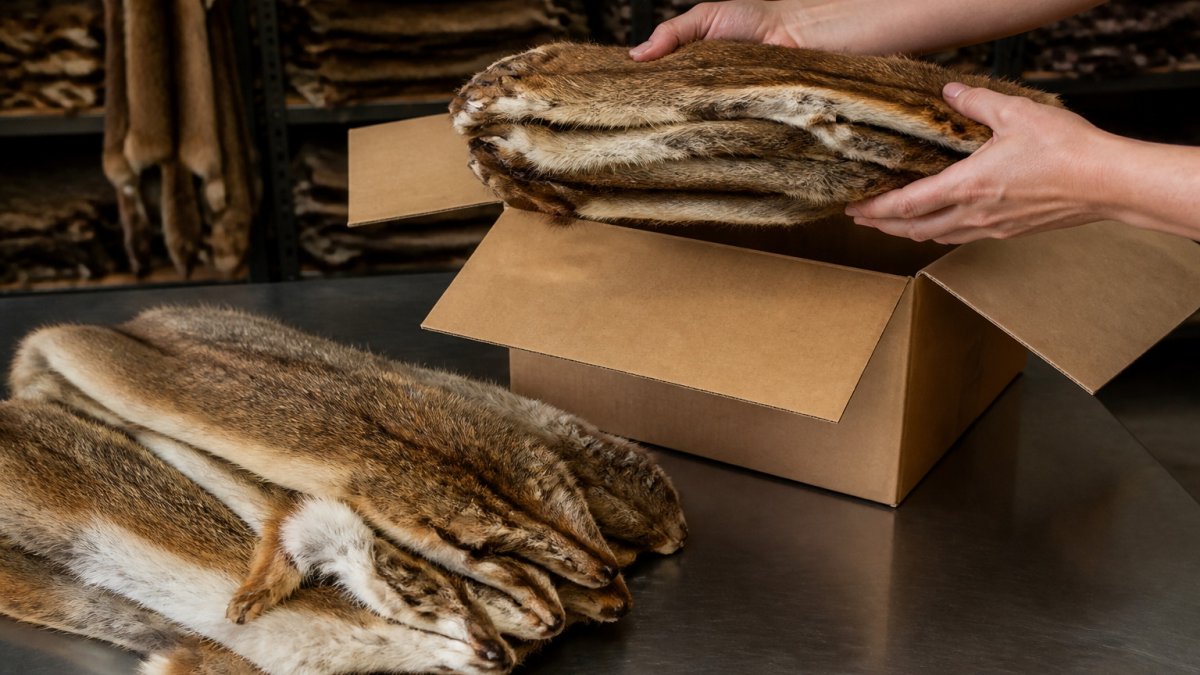
A simple packing routine:
- Fold pelts flat and stack them evenly
- Place them in a sturdy cardboard box that fits the load
- Fill empty space to prevent shifting
- Seal the box with strong tape and label it clearly
- Keep a copy of the packing list inside the box
Avoid oversized boxes. Extra empty space adds to the dimensional weight charge and increases the risk of damage. Use the smallest box that still protects the contents.
Carrier Options and Bulk Shipping Programs
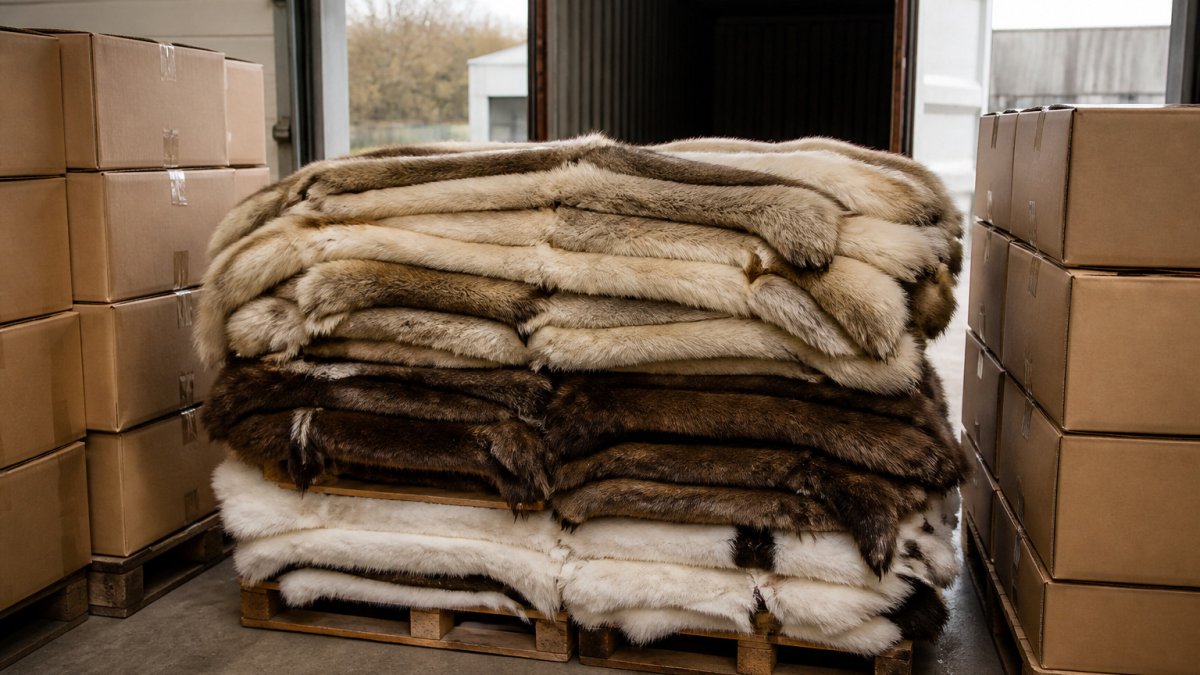
Most bulk fur shippers default to parcel service because it is familiar, then discover that parcel pricing punishes bulky, light freight. The real decision is not which carrier, it is which mode. Parcel and less-than-truckload (LTL) freight are priced on completely different logic, and the crossover point is where most of the savings hide.
Parcel Versus LTL: Where the Line Falls
Parcel service prices each box individually by billable weight and zone. LTL freight prices an entire palletized shipment by freight class, weight, and lane. The trade-off looks like this:
- Parcel works best for multi-box orders where each carton stays within standard size and weight limits. It is simple to book, easy to track, and priced per package.
- LTL works best once an order is palletized and heavy enough that per-box parcel rates stack up faster than a single freight bill. It is slower, requires more paperwork, and often involves a liftgate or appointment.
The crossover point between parcel and LTL depends on lane, class, and accessorials, so quote both modes on the same shipment before you assume parcel is cheaper.
Freight Class and Stowability
LTL pricing depends heavily on freight class, a density-and-handling rating. Fur pelts are light for their volume, which tends to push them toward higher classes and higher rates. Two levers matter:
- Density. Compressing pelts and packing pallets tightly raises density, which can move a shipment to a better class.
- Stowability and handling. Pallets that stack squarely, are shrink-wrapped, and are labeled clearly are easier for the carrier to handle and less likely to draw handling surcharges.
Class is assigned by the shipper and verified by the carrier, and a misclassified shipment can be re-billed after delivery. Confirm the class with the carrier before tendering the load.
Volume Programs and Business Accounts
Some carriers offer business accounts or volume-based programs that can lower per-package rates for shippers who ship often. Ask about them when you request quotes. Ask about them when you request quotes, and ask specifically whether the rate includes fuel surcharges and residential or delivery-area fees, those add-ons often erase the headline discount.
Be aware that carrier rules change. Confirm the current terms before you commit to a shipping method.
Shipping Raw Fur Regulations to Know Before You Ship
Shipping animal products can involve more than standard carrier rules, and requirements may vary by species, by state, and by whether the shipment crosses state lines.
Before you ship, check the regulations that apply to your product and destination. Confirm what paperwork the carrier requires. If you are unsure, ask the carrier or a qualified professional before shipping.
Pricing Breakdown and Pros and Cons of Common Shipping Methods
Each shipping method trades cost against speed, capacity, and convenience. Pricing depends on quantity, dates, and delivery, so the figures below are qualitative guides rather than fixed rates.
| Method | Best For | Main Advantage | Main Drawback |
|---|---|---|---|
| Ground parcel | Small to mid-size multi-box orders | Widely available, predictable | Dimensional weight can raise costs |
| Expedited parcel | Time-sensitive orders | Faster delivery | Higher cost |
| LTL freight | Very large, palletized orders | Efficient for heavy volume | Slower, more paperwork |
| Business account rates | Frequent shippers | Potential volume discounts | Requires setup and commitment |
Ground parcel
- Pro: Simple to book and track
- Con: Large, light boxes can be expensive
Expedited parcel
- Pro: Faster arrival
- Con: Costs more than ground service
LTL freight
- Pro: Good for heavy, bulk loads
- Con: More steps and documentation
Business account rates
- Pro: Can reduce per-package cost over time
- Con: Only worth it for steady volume
Getting a Shipping Quote for Your Next Bulk Order
The best way to plan your shipping budget is to get a quote before you order. Gather the total weight, box count, box dimensions, and destination, since these details are used to calculate the final cost.
When you are ready to compare options, you can browse all listings to see the range of products and categories that might make up your order. Shipping costs are easier to estimate once you know the exact quantities. For sellers, see how selling on Ethically Fur works and what fees apply. If you are weighing shipping costs for raw pelt shipments, you can also look through fur pelts for sale to understand the types and volumes involved.
Plan early, pack efficiently, and compare carrier options. A little preparation can keep your bulk fur shipping costs predictable.
Frequently Asked Questions
How are shipping costs calculated for bulk raw fur shipments?
Carriers usually bill on the greater of actual weight or dimensional weight, so a large, light box of pelts can cost more than its scale weight suggests. Costs also depend on the service level, the distance, any surcharges, and whether the shipment is insured. Pricing depends on quantity, dates, and delivery, so request a current quote from Ethically Fur or from your carrier before committing to an order.
Does the weight or volume of fur pelts impact shipping rates more?
For most bulk fur orders, volume matters as much as weight because carriers price by dimensional weight when a package is bulky relative to its mass. Dense, compressed bundles often ship at a lower billable weight than loosely packed boxes of the same contents. Comparing both the actual weight and the packed dimensions of your shipment shows which factor is driving your cost.
How do I package bulk fur to minimize dimensional weight charges?
Compress pelts to a consistent carton density without damaging the hair or leather, use the smallest box that fits the bundle, and avoid large empty space that adds billable volume. Keep packaging dry and breathable so the pelts do not mildew in transit. Measure the packed box and calculate its dimensional weight before you choose a carrier service.
Are there specific regulations for shipping raw animal pelts in the U.S.?
Shipments of raw pelts can be subject to federal wildlife rules, state trapping and sale regulations, and carrier restrictions, depending on the species and whether it crosses state or international lines. Requirements vary by species and destination, so confirm the rules that apply to your shipment with the relevant state wildlife agency and your carrier before you ship.