 ultimate-guide
Taxidermy Supply Sourcing Tips 2026: A Buyer's Guide
Table of Contents
- Why Taxidermy Supply Sourcing Changed in 2026
- Taxidermy Supplies for Beginners: Build the First Order Right
- How to Evaluate Taxidermy Supply Quality Before You Buy
- Taxidermy Hide Preservation Supplies: What to Stock and Store
- Comparing Taxidermy Supply Vendors: What Separates a Good Supplier
- Budgeting, Backorders, and Planning Around Supply Shortages
- Sourcing by Species: Fish, Bird, Small Mammal, and Large Game Supplies
- Conclusion
- Frequently Asked Questions
Last Updated: October 20, 2026
Why Taxidermy Supply Sourcing Changed in 2026
Taxidermy supply sourcing is the process of choosing, ordering, and managing the materials a mount requires, from cutting tools and preservatives to forms and glass eyes.
The shift is partly cultural and partly practical. Shoppers want documentation of responsible harvest, and suppliers who cannot answer basic provenance questions are losing repeat business.
Below, we break down how to build a first order, judge quality before checkout, compare vendors, and budget around shortages.
Taxidermy Supplies for Beginners: Build the First Order Right
The best beginner order covers four jobs: cutting, skinning, fleshing, and mounting. Buy mid-grade tools rather than the cheapest set, because a dull knife or a soft fleshing tool costs more in ruined hides than it saves at checkout.
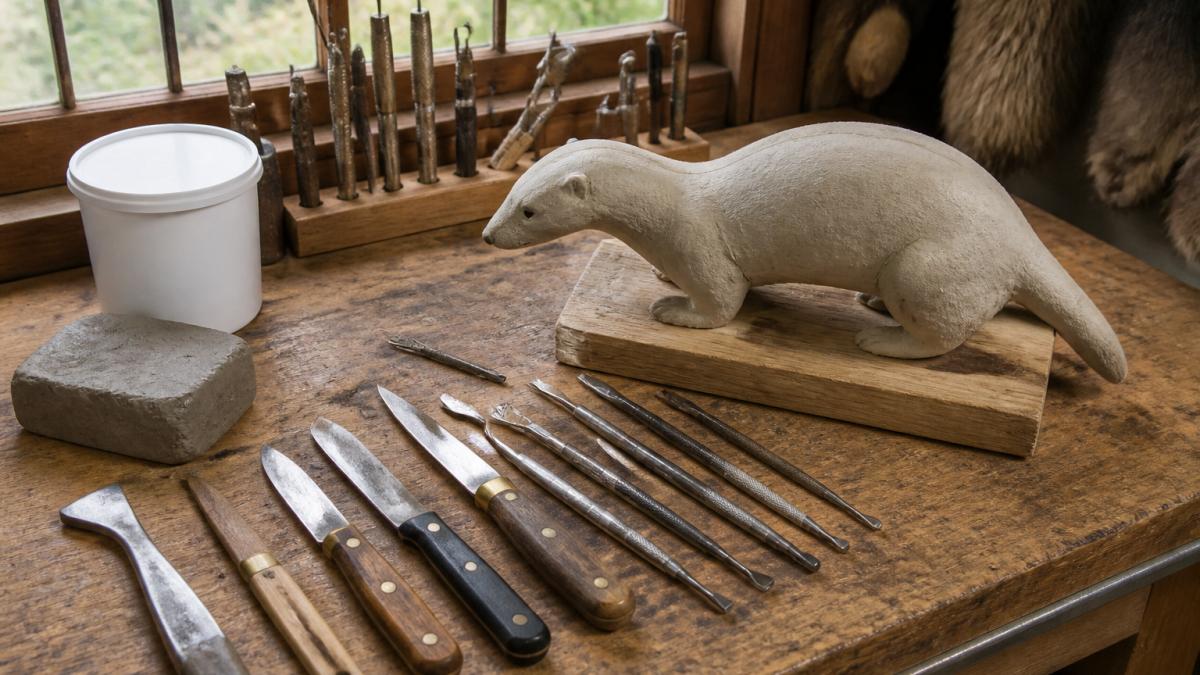
The Starter Kit That Covers Cutting, Skinning, and Fleshing
Start with a small number of items you will actually use:
- Scalpel and spare blades. A fresh blade matters more than a fancy handle.
- Two knives. One stiff blade for skinning, one flexible blade for detail work.
- Fleshing tool or beam. Match the tool to the hide thickness you expect.
A common mistake is buying a large kit full of tools you will never touch. Buy the four or five items you need for your first mount, then add as your skills grow.
Forms, Glass Eyes, and Finishing Materials
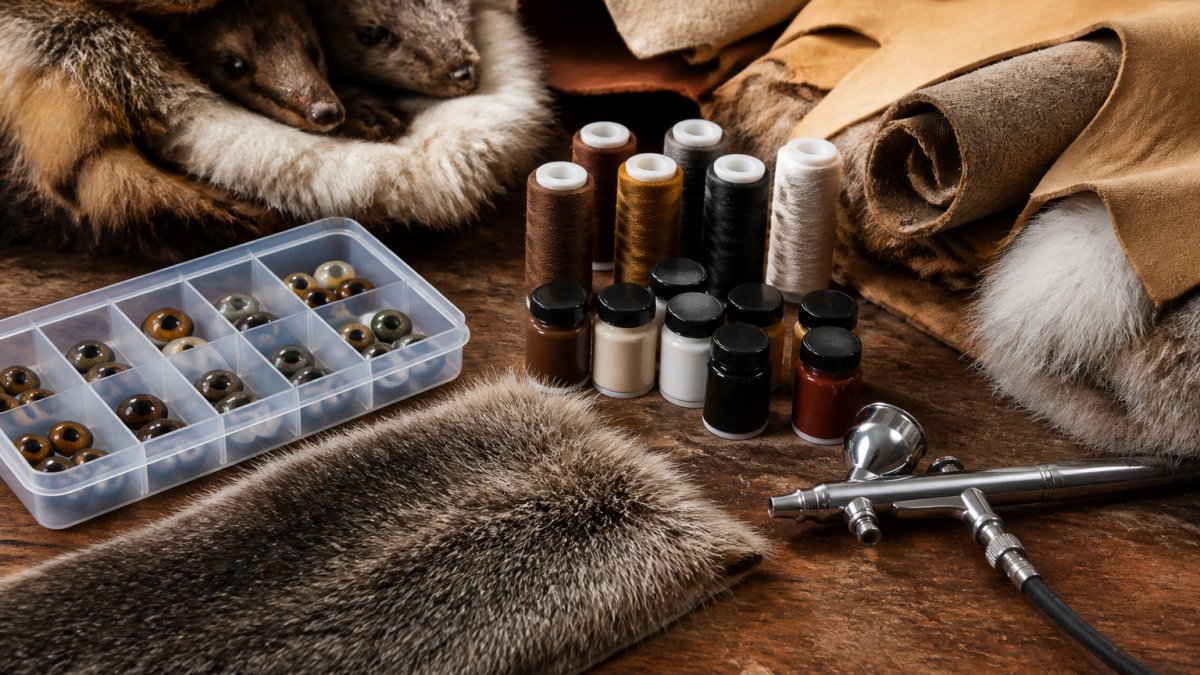
Forms, glass eyes, clay, sewing supplies, and finishing materials complete the order. Match the form to the species and pose you plan, and buy eyes sized for that form rather than guessing. Clay for detail work, thread in a hide-matching color, and a basic finishing kit round out the list.
How to Evaluate Taxidermy Supply Quality Before You Buy
Quality evaluation comes down to three checks: hide condition, material grade, and documentation.
Hide quality shows in the details. Look for even thickness, intact hair or feather coverage, and no visible slippage or grease burn.
Documentation is the piece most buyers skip. A supplier who can explain harvest origin, preservation method, and storage history is telling you how they handle everything else.
Taxidermy Hide Preservation Supplies: What to Stock and Store
Preservation supplies are the category where buying cheap backfires fastest. Stock borax or your chosen preservative, a dedicated fleshing area, and storage materials that keep moisture and pests out.
Store preserved hides in a cool, dry space away from direct light.
Buy preservation materials in quantities you will use within their stated shelf life. Bulk pricing looks attractive until half a container expires unused.
Comparing Taxidermy Supply Vendors: What Separates a Good Supplier
Most sourcing guides stop at "buy from a reputable supplier." That advice is useless when two vendors list the same species at the same grade and you have to pick one.
We group suppliers into three types, and each has trade-offs:
Vendor type | Strengths | Weaknesses | Best for |
|---|---|---|---|
Specialty taxidermy supplier | Deep species range, graded stock, staff who mount | Limited hours, seasonal gaps, higher per-unit pricing | Working studios with repeat species |
General marketplace | Wide selection, easy browsing, buyer protection | Uneven quality, thin documentation, mixed seller experience | Beginners testing materials |
Direct from harvester | Clear provenance, fair pricing, direct answers | Inconsistent inventory, variable packaging, no formal returns | Buyers who plan ahead and can wait |
Marketplaces, including Ethically Fur, sit in the middle. Our model connects buyers directly with North American hunters and trappers, which keeps provenance visible and lets you browse by species and material type.
Score Vendors on Six Criteria, Not Vibes
Before you place a first order with any supplier, score them 1-5 on each of the following. A total under 20 out of 30 is a signal to keep looking; 24 or above is a supplier worth a repeat order.
- Provenance clarity. Can they name the harvest region, the preservation method (dry, salted, frozen, tanned), and the date of preservation? Vague answers here predict vague answers everywhere else.
- Grade specificity. Is the grade printed on the listing (e.g., first-grade, commercial, damaged), or is it implied by a photo? Written grades are the only ones you can hold a supplier to.
- Measurement accuracy. Do listings give actual measurements, nose-to-tail length, neck circumference, eye socket size, or only a species name? Forms and eyes are sized in inches, and a half-inch miss ruins a fit.
- Shipping and packaging. Preserved materials ship differently than finished goods. Ask whether pelts ship flat or rolled, whether chemicals ship ground-only, and whether packaging is moisture-barrier.
- Return window and terms. Raw and preserved materials are often final-sale. Confirm in writing what happens if a hide arrives with slippage, grease burn, or insect damage.
- Lead time and backorder transparency. Does the listing show real stock, or does it say "usually ships in"? A supplier who flags backorders before checkout saves you a blown client deadline.
Verify Before You Commit
Scoring gets you to a shortlist. Verification gets you to a safe first order:
- Request a photo of the actual item, not a stock image, for any hide, form, or eye pair above a modest price. Most suppliers will send one for a serious buyer.
- Ask for the batch or lot number on preservatives and tanning chemicals, and check the expiration date against the label.
- Confirm compatibility between form, eye size, and species before ordering, a form listed for one pose may not accept the eye size you already own.
Questions to Ask Any Taxidermy Supply Vendor
Run this checklist before your first order with any supplier:
- Can you confirm the harvest origin and preservation method?
- Is the grade stated in writing on the listing?
- What are the actual measurements (length, neck, eye socket)?
If a vendor cannot answer two or more of these, keep looking. If they answer all six in writing, you have found a supplier worth building a relationship with.
Budgeting, Backorders, and Planning Around Supply Shortages
Budget planning starts with a simple split: spend most of your money on preservation materials and forms, and less on tools you can upgrade later. Tools are reusable; hides are not. A workable starting ratio for a first project is roughly 60% preservation materials and forms, 25% tools, and 15% finishing supplies and eyes, then shift toward tools as you take on repeat work.
A Practical Cost Framework by Project Type
Exact prices vary by species, grade, and season, so treat the following as planning categories rather than quotes. The point is to know which line items scale with the animal and which stay roughly fixed.
Cost category | Scales with species size? | Notes for planning |
|---|---|---|
Forms and manikins | Yes, strongly | Largest single line item on most mounts; sized in inches and priced by species and pose |
Glass eyes | Moderately | Priced per pair; species-specific shapes cost more than generic rounds |
Preservation chemicals | Yes, by hide area | Borax and tanning solutions scale with square footage of hide |
Cutting and fleshing tools | No, fixed | One-time purchase; upgrade over years, not projects |
Finishing supplies (clay, thread, adhesives) | Mildly | Consumables; buy small until you know your usage rate |
Shipping | Varies | Oversized forms and hazardous chemicals can carry surcharges |
A beginner mounting a small mammal should expect the form and eyes to dominate the budget. A studio mounting large game should expect preservation chemicals and shipping to rival the form cost.
Plan Around Seasonal Availability and Backorders
Backorders are the hidden cost in this category. Seasonal availability means some species and sizes simply are not in stock year-round, and a form that is listed today may be backordered next month. Plan around that with four habits:
- Order core items early. Forms and species-specific eyes have the longest lead times. Place those orders before you commit to a client deadline, not after.
- Keep a consumables buffer. Hold one spare container of your primary preservative and one spare set of blades. These are cheap to stock and expensive to run out of mid-project.
- Confirm in-stock status in writing. A listing that says "usually ships in" is not the same as in stock. Ask for a ship date before you promise one to a client.
Set a Reorder Cadence
Most working studios settle into a simple cadence: review consumables monthly, place form and eye orders quarterly or per project, and re-check vendor stock two weeks before a booked mount. The buyers who avoid shortages are the ones who order preservation materials and forms before they need them, not after a project is booked.
Sourcing by Species: Fish, Bird, Small Mammal, and Large Game Supplies
Species determines almost every supply decision you make. Fish taxidermy needs different forms, eyes, and finishing materials than bird taxidermy, and small mammal work sits somewhere in between.
- Fish: species-specific forms, reproduction heads, and fin materials; buy eyes sized to the form.
- Birds: properly sized forms, glass eyes matched to species, and careful feather handling supplies.
- Small mammals: forms, clay for facial detail, and ears and eyes matched to the species.
For species-specific work, confirm availability before you promise a client a delivery date. A supplier who lists stock accurately is worth more than one who lists everything as available.
Conclusion
The hardest part of taxidermy supply sourcing is not finding materials. It is finding materials you can trust, from suppliers who can prove where they came from and stand behind what they ship.
At Ethically Fur, we built our marketplace around that problem. We connect buyers with wild-harvested and ethically farmed products from North American sellers, offer many raw pelts, finished goods, and trapping supplies, and give you direct access to the people who harvested the material.
Frequently Asked Questions
What supplies does a beginner taxidermist need first?
Start with cutting and skinning tools (a scalpel and a sharp knife), fleshing tools, a preservation material such as borax, and a form and glass eyes for your first species. Add sewing supplies, clay for detail work, and finishing tools as you progress. Buy a starter kit sized to one animal type rather than a broad bundle, so you learn each tool before expanding your taxidermy supply order.
How can I tell whether taxidermy supplies are good quality?
Check the steel and edge retention on knives and scalpels, confirm forms match species-specific measurements, and ask whether glass eyes are cast for the correct eye orientation. For pelts, look for consistent thickness, clean fleshing, and no slippage at the hair roots. A good vendor documents grades and answers questions about how to evaluate taxidermy supply quality before you commit to a purchase.
Why do taxidermists use borax, and when is it appropriate?
Borax draws moisture out of thin-skinned hides and helps deter insects during preparation. It works well for small mammals, bird skins, and touch-up work, but it is not a substitute for proper tanning on thicker hides or life-size mounts. Use it as a preparation aid alongside tanning chemicals, and store it sealed because it absorbs moisture from the air.
How do I compare taxidermy supply vendors before ordering?
Compare on four points: catalog depth for your species, whether items are in stock or on backorder, shipping and return policy, and how quickly the vendor answers product questions. Ask for documentation on hide sourcing if ethics matter to you. A vendor that lists current availability and gives clear substitution options saves more time than one with a lower sticker price and frequent shortages.
What should I ask a seller before buying a raw hide or pelt?
Ask how the animal was harvested, whether the hide was fleshed and salted or frozen, and what grade it carries. Request photos of the actual pelt, not a stock image, and confirm measurements. Ask about the return policy for damaged goods and how the item ships. Clear answers on sourcing and condition separate a reliable taxidermy supply vendor from a reseller.
How should taxidermy supplies be stored after purchase?
Keep preservatives and tanning chemicals sealed in a dry, ventilated space away from moisture. Store raw hides frozen until you are ready to work, and keep finished forms and glass eyes in a dust-free area. Label chemicals with purchase dates, rotate stock so older items get used first, and never store borax or tanning agents near food or damp tools.