 how-to
How to Grade Raw Fur Pelts: Step-by-Step
Table of Contents
- What You'll Need Before Grading Raw Fur Pelts
- How to Prepare a Pelt for Grading
- Understanding Fur Pelt Grading Standards
- Step-by-Step Grading Workflow for Raw Fur Pelts
- Identifying Raw Pelt Defects and Their Impact
- Raw Pelt Value Factors That Affect Grade and Sale Price
- Species-Specific Grading Differences
- Common Mistakes to Avoid When Grading
- Frequently Asked Questions
Last Updated: October 18, 2026
What You'll Need Before Grading Raw Fur Pelts
Before grading raw fur pelts, gather the right tools to work efficiently and spot problems faster.
A clean, flat work surface with good lighting is essential. Natural light works best, but a bright lamp will do.
You'll want these basic items:
- Magnifying glass or jeweler's loupe for close inspection
- Measuring tape or ruler for recording pelt dimensions
- Notebook or tablet to record grades and notes
- Gloves to protect the fur from oils on your hands
- Soft brush to gently check fur direction and density
We recommend keeping a grading reference sheet nearby for consistency across multiple pelts.
A simple kitchen scale helps if you want to track pelt weight, which some buyers care about.
Bright, even light makes discoloration, singed hair, and defects far easier to spot. Shadows hide problems.
How to Prepare a Pelt for Grading
Raw pelts need basic prep so you evaluate actual condition, not dirt or debris.
If the pelt was frozen, make sure it's fully thawed. Frozen pelts can look different from their true state.
Gently brush the fur in its natural direction with a soft brush and light pressure to remove loose dirt without damaging hair.
Check the flesh side for dried blood or tissue. Poor fleshing lowers grades; the skin should look pale or white, not dark or stained.
Air dry a damp pelt before grading. Wet fur hides damage and skews your grade.
Lay the pelt flat and stretch it gently to see its full size and condition. Don't force it; you want to see how it naturally lays.
Understanding Fur Pelt Grading Standards
Grade raw fur pelts using three main categories that help buyers understand what they're getting and set fair prices.
Systems vary slightly between buyers and species, but the basics stay the same. Understanding these core grades helps you communicate clearly with buyers.
Grade 1
Grade One represents the best raw pelts available, with perfect or near-perfect fur and no visible damage.
Grade 1 pelts show:
- Full, dense fur with no bare spots
- Uniform color with no yellowing or staining
- Clean, pale creamy or parchment-colored skin side with no holes or tears
- No singed or damaged guard hairs
- Excellent overall appearance
Prime pelts command the highest prices and are ready for immediate use or sale.
Grade I part II
Grade 1 Part 2 Is a top-tier pelt that is nearly prime, or slightly transitional, combining characteristics of Grade I and Grade II.
Grade II
Grade 2 AKA Good grade pelts are usable with minor imperfections, showing good fur density but some visible wear.
Good grade pelts typically have:
- Slight color variation or minor yellowing
- Small areas of thin fur or minor balding
- One or two small holes or minor tears in the skin
- A few singed hairs but not widespread damage
- Overall solid appearance despite minor flaws
- May have less-dense under-fur
- May be slightly early or late (blue)
Crafters and taxidermists use good grade pelts regularly. The price is lower than prime but still reflects decent quality.
Grade III
Grade 3 or Utility grade pelts have noticeable damage or poor condition but are still usable for limited applications.
Grade 3 pelts show:
- Significant color fading or yellowing
- Thin or sparse fur in multiple areas
- Flat hair
- limited guard hair
- Several holes or tears in the skin
- Widespread singed or damaged hair
- Overall worn appearance
- Furs caught too early with thin leather (blue)
Grade IV
Grade 4 or Low utility grade pelts are non-prime, badly damaged or summer caught pelts with no commercial value.
Grade 4 pelts will show some of:
- Very thin fur
- Many large holes
- Many or very large bald spots
Grade V
Grade 5 or scrap pelts are the lowest tier.
- These are severely damaged or degraded skins
- They may not have any use outside of scrap or specialty crafting use.
Utility pelts and lower cost less and have limited buyer interest. Some fly tiers and crafters use them where quality isn't critical.
Step-by-Step Grading Workflow for Raw Fur Pelts
Follow this workflow to grade raw fur pelts consistently and avoid missing problems.
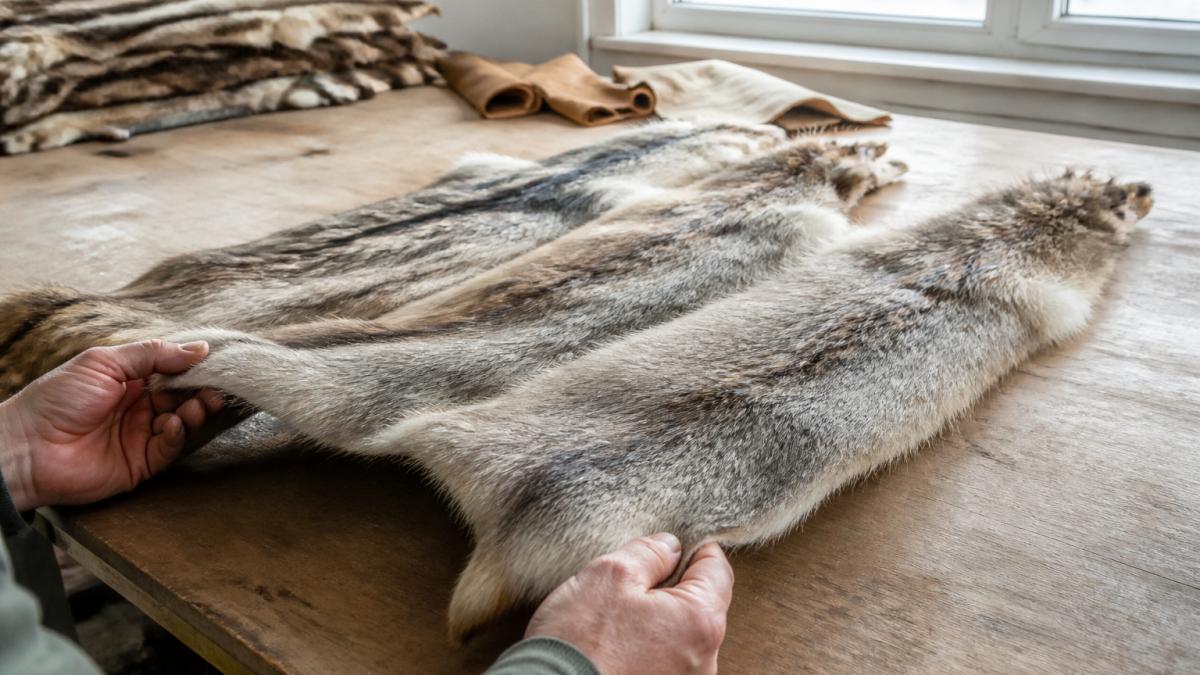
Step 1: Inspect Cleanliness and Discoloration
Examine the pelt's overall cleanliness, looking for dirt, staining, or discoloration across the fur surface.
Check for these problems:
- Yellowing or yellow cast on white or light fur
- Brown stains or dark spots
- Dirt or debris stuck in the fur
- Matted or clumped areas
- Fading compared to natural color
Heavy yellowing drops a pelt at least one full grade, as does blood staining. Light surface dirt can sometimes be cleaned, but permanent discoloration is a major issue.
Discoloration signals storage problems like poor freezing, moisture exposure, or age, and buyers pay less for it.
Step 2: Check Fur Density and Guard Hairs
Examine how thick and full the fur is. Dense fur with strong guard hairs indicates a healthy pelt.
Run your fingers gently through the fur. Feel for:
- Thick, full coverage with no bare patches
- Strong guard hairs that stand up properly
- Even density across the entire pelt
- No thin spots or areas where skin shows through
Guard hairs are the longer, stiffer hairs that give fur structure and protect the softer underfur. Weak or missing guard hairs lower the grade significantly.
Fur density varies by species and season. Winter pelts are thicker than spring pelts. Know what's normal for the species you're grading.
Step 3: Assess Hair Damage and Singed Hair
Look closely for damaged or singed hair. This is one of the biggest grade factors.
Singed hair appears darker, shorter, or burned-looking. It damages the appearance and reduces the pelt's value. Check for:
- Burnt or discolored hair tips
- Hair that's shorter than surrounding fur
- Blackened or charred areas
- Sparse patches where hair is missing
Singed hair often comes from improper skinning or storage. Some pelts get singed during the freezing process. Heavy singed hair drops a pelt from prime to good or good to utility grade.
Use your magnifying glass here. Small singed areas are easy to miss. Look at multiple spots across the pelt, not just one area.
Step 4: Identify Visible Defects
Check for holes, tears, or other physical damage to the skin.
Common defects include:
- Holes from trapping or bullet wounds
- Tears in the hide
- Thin or weak areas
- Scars or healed wounds
- Insect damage or parasites
Small holes (less than a quarter inch) might not drop the grade much. Large tears or multiple holes significantly lower value. A pelt with major damage might drop to utility grade.
Examine both the fur side and the flesh side. Damage on either side counts. Flip the pelt and check the skin carefully.
Step 5: Record Measurements and Notes
Write down the pelt's dimensions and your observations. This creates a record you can reference later.
Measure and record:
- Length from nose to tail base
- Width at the widest point
- Approximate weight if you have a scale
- Grade assessment (prime, good, or utility)
- Specific defects or issues
- Any special notes about condition
Detailed notes help you remember why you gave a certain grade. They also help buyers understand what they're getting. If you sell multiple pelts, notes keep you organized.
Identifying Raw Pelt Defects and Their Impact
Raw pelt defects directly affect grade and sale value. Understanding how defects impact grading helps you price fairly and manage expectations.
Holes and tears are the most obvious defects. Small holes under a quarter inch might not drop the grade.
Singed hair damages appearance and reduces usability. Widespread singed hair is a major problem. Even small burnt areas lower the grade.
Thin or balding spots show poor fur quality or health problems. These areas reduce the pelt's usefulness for most projects. Multiple thin spots drop the grade significantly.
Yellowing and discoloration signal age or storage problems. Permanent staining is hard to reverse. Buyers expect to pay less for discolored pelts.
Parasites or insect damage can ruin a pelt. Look for small holes, eggs, or evidence of infestation. Infested pelts may not sell at all.
Poor fleshing on the skin side shows careless preparation. Dried blood, tissue, or fat left on the hide indicates rushed work.
Raw Pelt Value Factors That Affect Grade and Sale Price
Several factors beyond appearance affect how you grade raw fur pelts and what buyers will pay.
Species matters enormously. Beaver, muskrat, and fox pelts command different prices. Rare species are worth more than common ones.
Size affects value. Larger pelts of the same grade are worth more. A big beaver pelt sells for more than a small one.
Season changes fur quality. Winter pelts are thicker and more valuable. Spring and summer pelts have thinner fur and lower value.
Rarity increases value. Unusual colors or markings can make a pelt more desirable.
Buyer demand fluctuates. Some species are hot one year and cold the next. Taxidermists, fly tiers, and crafters have different needs and budgets.
Our marketplace connects sellers with buyers who understand these factors. It helps you find the right audience for your pelts.
Market conditions affect pricing. Fur prices rise and fall with fashion trends and material availability. Stay informed about current market demand for your species.
Species-Specific Grading Differences
Different species have different grading standards. What's prime for one species might be good for another.
Beaver pelts are graded on fur density and color. Beaver fur is thick and valuable. Beavers trapped in winter have premium pelts.
Muskrat pelts are smaller and graded on uniformity. Color consistency matters more than with larger species.
Fox pelts are valued for color and guard hair quality. A fox pelt with poor guard hairs grades lower even if the underfur is good.
Coyote and wolf pelts are large and graded on overall condition. Size is a major value factor. Any significant damage drops the grade.
Rabbit and hare pelts are fragile and grade lower if hair slips easily. The fur is delicate and prone to damage.
Otter pelts are dense and graded on fur quality and color. River otter fur is highly valued.
Learn the standards for each species you work with. Buyers expect accurate grading based on their species. Wrong grading ruins your reputation.
Common Mistakes to Avoid When Grading
Avoid these mistakes when you grade raw fur pelts. They lead to inaccurate grades and unhappy buyers.
Grading in poor light is the biggest mistake. Shadows hide defects.
Rushing through the process causes you to miss problems. Spend time on each step. A careful grade takes 10-15 minutes per pelt.
Comparing pelts while grading skews your judgment. Grade each pelt on its own merits.
Being too generous with grades hurts your reputation. Buyers expect accurate grading. Overgrading leads to complaints and returns.
Being too harsh loses sales. Some graders undergrade to be safe. This costs you money and frustrates buyers who want premium pelts.
Ignoring species standards creates confusion. A good-grade beaver is different from a good-grade muskrat. Know what's normal for each species.
Not documenting your grades makes it hard to track patterns. Keep notes on every pelt.
Touching the fur too much damages it. Minimize handling during grading. Oils from your hands can stain fur.
Frequently Asked Questions
What factors determine the grade of a raw fur pelt?
Grade depends on fur density, guard hair quality, cleanliness, and visible defects. Prime pelts have thick, uniform fur with no damage or staining. Good-grade pelts show minor wear or slight discoloration. Utility-grade pelts have obvious defects like singed hair or holes. Species also affects grading standards—river otter and beaver follow different criteria.
How do defects affect a pelt's grade and value?
Defects directly lower both grade classification and sale value. Holes, thin spots, and singed hair reduce the usable material. Staining, yellowing, and uneven color reduce aesthetic appeal. Matted or damaged guard hairs lower fur quality assessment. Each defect type has different impact depending on location, size, and severity. Buyers grade down accordingly, which affects what you can sell the pelt for on auction or through direct sale.
How should a raw pelt be prepared before grading?
Start with proper storage and handling. Thaw frozen pelts gradually in cool conditions. Clean off excess dirt or debris gently without damaging fur. Ensure the pelt is laid flat and fully dry before inspection. Check that fleshing was done correctly—remaining flesh affects cleanliness grade. Allow adequate airflow during storage to prevent yellowing or mold. Proper preparation ensures accurate grading and preserves pelt condition for buyers.
Can you freeze a pelt before fleshing and grading?
Yes, freezing is a standard preservation method for raw pelts. Frozen pelts can be stored for months without quality loss if thawed properly. Thaw slowly in cool conditions to prevent hair slippage and damage. Fleshing can happen before or after freezing, though many trappers flesh first, then freeze. Grading should occur after the pelt is fully thawed and dry. Improper thawing damages fur quality and affects grade assessment.
Looking to sell or buy raw fur pelts? At Ethically Fur, we connect trappers and hunters with buyers who understand quality and value fair pricing. Our marketplace features pelts graded by experienced professionals, so you know exactly what you're getting. Browse our listings today and find premium materials for your next project.